


As a trusted supplier of mercury outboard pistons, I've seen firsthand the importance of studying the corrosion resistance of these critical components. In the demanding marine environment, outboard pistons are constantly exposed to water, salt, and various chemicals, making their corrosion resistance a key factor in determining their performance and lifespan. In this blog post, I'll explore what corrosion resistance means for mercury outboard pistons, the factors that affect it, and how we ensure the high - quality corrosion resistance of our products.
Understanding Corrosion Resistance
Corrosion resistance refers to the ability of a material to resist the damage caused by chemical or electrochemical reactions with its environment. For mercury outboard pistons, the primary concern is the corrosion that occurs when they are in contact with water, especially saltwater. Saltwater contains a high concentration of dissolved salts, such as sodium chloride, which can accelerate the corrosion process.
When a piston corrodes, it can lead to a variety of problems. Firstly, it can cause the piston to lose its proper dimensions. The pitting and roughness on the piston surface can increase friction between the piston and the cylinder wall, leading to increased wear and tear. Over time, this can reduce the engine's performance, causing a decrease in power output, higher fuel consumption, and potential mechanical failures. Secondly, corrosion can also affect the piston rings' sealing ability. If the piston rings can't seal properly due to a corroded piston, it can result in compression loss, oil leakage, and poor engine combustion efficiency.
Factors Affecting the Corrosion Resistance of Mercury Outboard Pistons
Material Selection
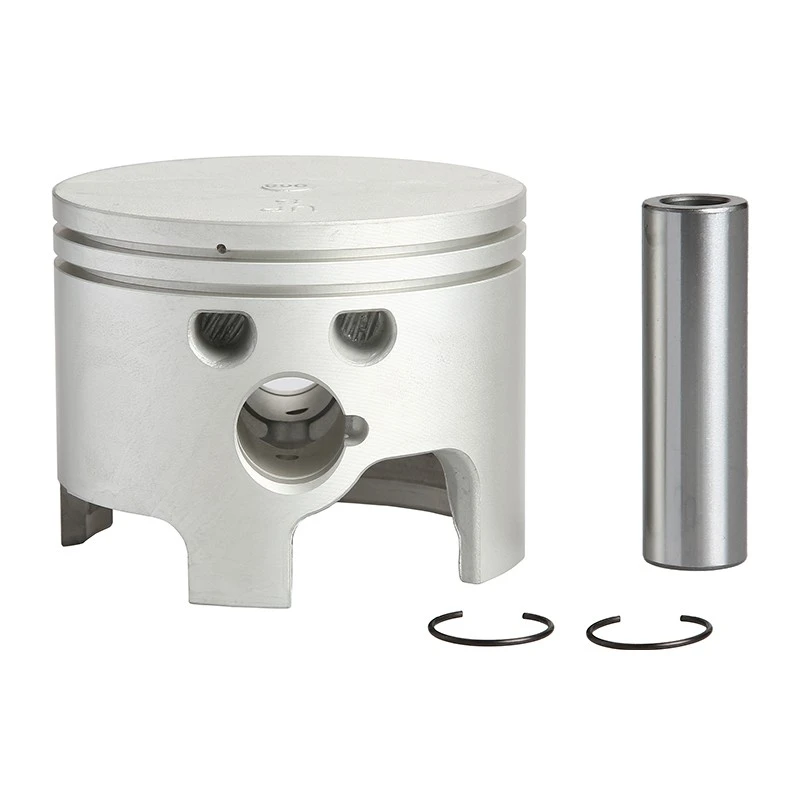
The choice of material is the most fundamental factor influencing the corrosion resistance of mercury outboard pistons. We typically use high - quality aluminum alloy for our pistons as it has several advantages. Aluminum alloy has good lightweight properties, which helps to reduce the overall weight of the engine and improve its power - to - weight ratio. At the same time, it can form a thin oxide layer on its surface when exposed to air. This oxide layer acts as a protective barrier, preventing further corrosion.
However, not all aluminum alloys are created equal. We select specific alloys that are designed to withstand the marine environment better. These alloys often contain elements such as magnesium, silicon, and copper, which enhance their corrosion resistance and mechanical properties. For example, magnesium can improve the alloy's strength and hardness, while silicon can enhance its wear resistance and reduce thermal expansion.
Surface Treatment
Surface treatment is another crucial factor in enhancing the corrosion resistance of mercury outboard pistons. We use several surface treatment methods to protect the pistons from corrosion. One common method is anodizing. Anodizing is an electrochemical process that thickens the natural oxide layer on the aluminum surface. The anodized layer is much harder and more corrosion - resistant than the natural oxide layer. It can provide a long - term protective barrier against water, salt, and other corrosive substances.
Another surface treatment we employ is the application of special coatings. These coatings are specifically formulated to resist marine corrosion. They can fill in any microscopic pores or cracks on the piston surface, further preventing the penetration of corrosive agents. Additionally, some coatings have self - healing properties, which means that if the coating is damaged in a small area, it can repair itself to some extent to maintain the overall protection of the piston.
Environmental Conditions
The environmental conditions in which the outboard engine operates play a significant role in the corrosion rate of the pistons. As mentioned earlier, saltwater is much more corrosive than freshwater. Engines that operate in coastal areas or in the open sea are exposed to a higher risk of corrosion. The presence of other contaminants in the water, such as pollutants and industrial waste, can also accelerate the corrosion process.

Temperature and humidity also affect corrosion. High humidity can create a moist environment that promotes the formation of an electrolyte, which is necessary for electrochemical corrosion to occur. High temperatures can increase the reaction rate of corrosion, making the pistons corrode more quickly.
Our Commitment to High - Quality Corrosion Resistance
As a mercury outboard piston supplier, we are committed to providing our customers with pistons that have excellent corrosion resistance. We start with the strict selection of raw materials. We work closely with our material suppliers to ensure that the aluminum alloys we use meet our high - quality standards. Our in - house quality control team conducts regular tests on the incoming materials to check their chemical composition, mechanical properties, and corrosion resistance.
In terms of surface treatment, we have invested in advanced anodizing and coating equipment. Our production processes are carefully monitored to ensure that each piston receives a uniform and high - quality surface treatment. We also conduct various corrosion tests on the finished pistons, such as salt spray tests, to simulate the harsh marine environment and verify the effectiveness of our corrosion - prevention measures.
Our Product Range
We offer a wide range of mercury outboard piston kits to meet the different needs of our customers. Each of our products has been designed and manufactured with a focus on corrosion resistance. Here are some of our popular products:
- 705 - 850026T3 76MM Piston Kit for Mercury 30HP 40HP 2 Stroke 2 Cylinder Model: This piston kit is suitable for specific mercury 30HP and 40HP two - stroke, two - cylinder engines. It is made of high - quality aluminum alloy and has undergone advanced surface treatment to ensure excellent corrosion resistance.
- 767 - 879878T5 65MM Piston Kit for Mercury 15 - 25 HP 2Cyl Pro: Designed for 15 - 25 HP two - cylinder mercury engines, this piston kit offers reliable performance and long - lasting corrosion protection.
- 785 - 854687A11 88.8MM Piston Kit for Mercury 175 - 250 HP 2.5L: For more powerful 175 - 250 HP 2.5L mercury engines, this piston kit is built to withstand the high - stress and corrosive marine environment.
Contact Us for Procurement
We understand that corrosion resistance is a top priority for our customers who use mercury outboard engines. Our high - quality pistons are designed to provide long - term reliability and performance in the harsh marine environment. If you are interested in our mercury outboard piston products, please feel free to contact us for procurement discussions. We are ready to provide you with detailed product information, competitive pricing, and excellent customer service.
References
- Davis, J. R. (ed.). (2001). Aluminum and Aluminum Alloys. ASM International.
- Fontana, M. G. (1986). Corrosion Engineering. McGraw - Hill.
- Uhlig, H. H., & Revie, R. W. (1999). Corrosion and Corrosion Control: An Introduction to Corrosion Science and Engineering. Wiley.


