At the heart of every marine engine lies the piston, an irreplaceable component that transforms combustion energy into mechanical power. Directly influencing vessel performance, fuel efficiency, and operational costs, the piston's material selection becomes a pivotal factor in any marine engine's lifespan and reliability.
As a longstanding practitioner in the marine piston industry, I've witnessed firsthand the engine failures, performance degradation, and increased operational costs caused by poor material choices. Today, I will conduct an in-depth analysis of the differences between aluminum alloy and cast iron pistons, the two primary piston materials in use today. This comparison will cover technical principles, practical applications, and cost-effectiveness to help you make the most informed decision for your marine operations.
I. Basic Material Property Comparison
Aluminum Alloy Pistons: The Perfect Combination of Lightweight Design and Heat Dissipation
Aluminum alloy pistons represent one of the most common choices in modern marine engines, offering several distinct advantages:
Weight Reduction Advantage: Aluminum alloy's density is approximately one-third that of cast iron, resulting in significantly lighter pistons of the same dimensions. In high-speed engines, reciprocating mass directly affects engine response speed and balance. Lighter pistons not only reduce stress on the crankshaft but also enable higher engine speeds, unlocking greater power output potential.
Superior Heat Dissipation: This is aluminum alloy piston's most prominent advantage. With thermal conductivity values ranging from 120-160 W/m·K compared to cast iron's 40-50 W/m·K, aluminum alloy pistons efficiently transfer combustion heat to cylinder walls for dissipation through cooling systems. This capability is critical for preventing overheating failures in engines operating under prolonged high-load conditions.
Precision Manufacturing Capability: Aluminum alloy's excellent casting properties enable the production of complex, high-precision piston designs. Modern pistons often require intricate combustion chamber shapes and specialized oil groove configurations in skirt areas, all achieved through advanced aluminum alloy casting techniques. This manufacturing advantage allows aluminum pistons to better meet modern engine efficiency and emission requirements.
However, aluminum alloy pistons have inherent weaknesses. They exhibit relatively lower wear resistance, particularly under high-temperature, high-load conditions where their strength noticeably decreases. Furthermore, aluminum alloy piston costs are typically 30%-50% higher than cast iron alternatives, an important consideration for cost-conscious marine operators.
Cast Iron Pistons: The Traditional Choice for Durability and Affordability
While less common in modern high-speed marine engines, cast iron pistons maintain irreplaceable advantages in specific applications:
Exceptional High-Temperature Strength: Cast iron retains its strength far better than aluminum alloy at high temperatures. Large low-speed diesel engines operate under extreme thermal and mechanical stresses that cast iron pistons withstand admirably, maintaining structural integrity under extreme operating conditions.
Outstanding Wear Resistance: Cast iron's hardness ranges from 180-250 HB compared to aluminum alloy's 100-150 HB. Greater hardness translates to reduced friction and wear against cylinder walls during long-term operation, directly contributing to longer maintenance cycles and lower operating costs for vessels requiring continuous service.
Cost-Effectiveness: Cast iron manufacturing costs remain relatively lower, a significant consideration for large-scale marine operations. As components represent major operational expenditures, cast iron pistons offer viable cost control solutions without compromising basic performance requirements.
The primary limitations of cast iron pistons lie in their weight, which increases engine reciprocating inertia and restricts maximum rotational speed. Additionally, cast iron's poorer heat conductivity requires more complex cooling systems to manage heat dissipation effectively.
II. Practical Application Scenario Comparison
Material Selection by Engine Type
Different marine engine types have distinct piston material requirements. Based on Starwave's extensive industry experience, we recommend the following material selection guidelines:
| Engine Type | Recommended Material | Rationale |
|---|---|---|
| Small Outboards (2.5-100 HP) | Aluminum Alloy | High speed requirements favor lightweight materials |
| Medium Outboards (100-200 HP) | Aluminum Alloy | Balances power output with responsive performance |
| Large Main Engines (300-1000 HP) | Cast Iron | High-load applications demand superior durability |
| Auxiliary Power Systems | Either Material | Selection depends on specific operating conditions and budget |
Small outboards prioritizing high speed and rapid response benefit most from aluminum alloy piston lightness. Conversely, large main engines operating under continuous high stress rely on cast iron piston durability.
Material Selection by Vessel Type
Vessel operational characteristics significantly influence piston material choices:
High-Speed Yachts and Motorboats: These vessels prioritize speed and maneuverability, with engine RPM performance greatly affecting overall experience. Aluminum alloy pistons deliver optimal response speed and power output. Since these vessels often see intermittent use rather than continuous operation, aluminum piston lifespans prove fully adequate for typical usage patterns.
Ocean-Going Cargo Vessels and Large Fishing Boats: Operating under extreme marine conditions with continuous heavy engine loads, these vessels require maximum piston reliability. Cast iron pistons excel in these applications, as their heavier weight becomes irrelevant relative to overall vessel displacement, while their exceptional durability ensures thousands of hours of trouble-free operation.
Inland Waterway Vessels: Operating in relatively benign conditions with moderate engine loads, both materials perform adequately. Material choice should balance initial costs with long-term maintenance considerations for these service environments.
III. In-Depth Comparison of Key Technical Indicators
To provide an objective performance comparison, we present the following technical parameter comparison table:
Performance Parameter Comparison
| Metric | Aluminum Alloy Piston | Cast Iron Piston |
|---|---|---|
| Density (g/cm³) | ~2.7 | ~7.2 |
| Thermal Conductivity (W/m·K) | 120-160 | 40-50 |
| Tensile Strength (MPa) | 250-350 | 300-450 |
| Hardness (HB) | 100-150 | 180-250 |
| Maximum Operating Temperature (°C) | 350-400 | 400-500 |
These parameters confirm aluminum alloy's superiority in heat transfer and lightweight construction, while cast iron demonstrates stronger mechanical strength characteristics. This supports the conclusions presented in previous analysis sections.
Lifecycle Cost Comparison
Material selection should consider total operating costs throughout lifecycle, rather than focusing solely on initial purchase price:
Initial Purchase Cost: Aluminum alloy pistons typically cost 30%-50% more than cast iron alternatives. For vessels requiring multiple piston replacements simultaneously, this represents a significant upfront investment. However, when factoring in aluminum pistons' improved fuel economy and performance capabilities, these additional costs often prove recoverable through operational efficiency gains.
Maintenance Costs: Cast iron pistons, thanks to their superior wear resistance, require less frequent servicing. Especially under high-load conditions, aluminum pistons may need more frequent replacement or repair. However, aluminum piston replacement tends to be simpler and faster due to their lighter weight and easier handling characteristics.
Fuel Costs: Aluminum pistons' lighter weight reduces engine friction losses, improving overall fuel efficiency. In applications where fuel represents a substantial operating cost, this advantage becomes particularly significant. Real-world usage data shows aluminum pistons typically reduce fuel consumption by 3%-5% compared to cast iron alternatives in similar operating conditions.
Replacement Cycle: Under high-load operating conditions, cast iron pistons typically achieve approximately double the service life of aluminum pistons. However, in moderate load applications, this lifespan difference becomes less pronounced, enhancing aluminum piston cost-effectiveness in these operating environments.
IV. Starwave Professional Recommendations
As a leading marine piston manufacturer founded in 2010, Starwave has accumulated extensive selection expertise and customized solution capabilities. Based on practical application experience, we recommend the following selection methodology:
Selection Decision Tree
When choosing piston materials, we recommend following this decision-making process:
Evaluate Engine Power and RPM Range: Identify your engine type, power output, and rotational speed characteristics. High-speed engines favor aluminum pistons, while low-speed heavy-load engines better suit cast iron pistons.
Assess Operating Environment: Consider factors including saltwater/freshwater operation, load characteristics, and continuous run time requirements. Hostile environments and high-load operations generally favor cast iron piston selection.
Balance Initial Investment and Long-Term Operating Costs: Avoid relying solely on price comparisons. Consider factors such as fuel consumption reduction, maintenance frequency, and replacement cycle when calculating total cost of ownership. Higher initial investments often prove more economical over extended operational periods.
Integrate Customized Solutions: For specialized operational requirements, consider customized piston solutions. Starwave's professional engineering team can develop tailored designs addressing specific application challenges.
Starwave Product Advantages
As a national high-tech enterprise, Starwave has deep technical expertise in piston material optimization:
Specialized Wear-Resistant Coating for Aluminum Pistons: Our advanced surface coating technology creates a protective layer on aluminum piston surfaces that extends service life by over 30%. This technology retains aluminum's weight advantages while addressing inherent wear resistance limitations.
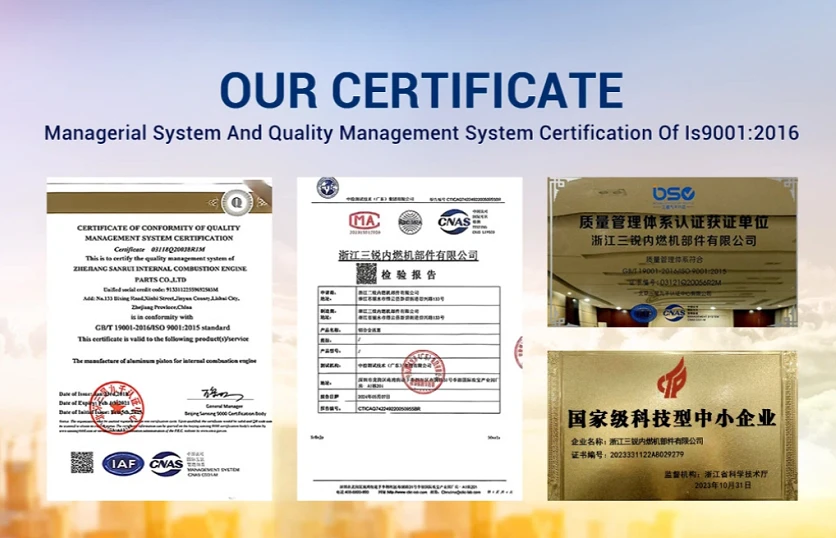
Strict Quality Control Systems: Our products adhere to IATF 16949 international quality standards, with rigorous quality checks performed at every stage from raw material sourcing to finished product inspection. Whether aluminum or cast iron, our pistons consistently achieve international quality benchmarks.
Continuous R&D Investment: As a national high-tech enterprise, we invest significant annual revenue in new product development. Our engineering team continuously explores advancements in materials science, structural design, and surface treatments to deliver state-of-the-art product solutions.
V. Starwave Premium Piston Product Recommendations
Building upon our analysis of aluminum alloy piston advantages, we present the following three premium aluminum piston offerings. These products utilize advanced aluminum materials and precision manufacturing processes to meet diverse marine engine power requirements:
High-Performance Choice for Small Outboards
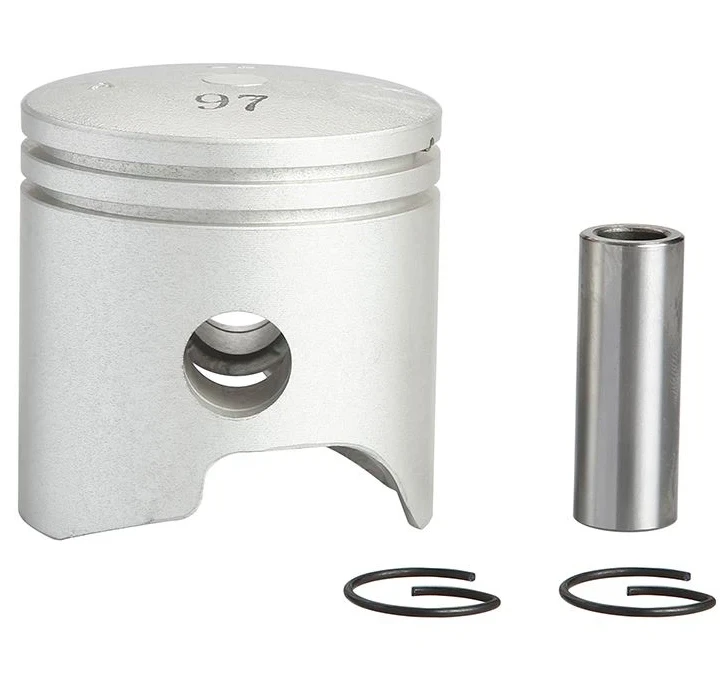
6E7-11631-00 56MM Piston Kit for Yamaha 9.9HP 15HP 2 Stroke
Specifically designed for Yamaha 9.9HP and 15HP two-stroke outboard engines, this 56mm bore piston weighs only one-third equivalent cast iron counterparts. Ideal for small fishing vessels and auxiliary power systems, this piston delivers exceptional acceleration performance and fuel efficiency.
Application Scenarios: Small fishing boats, auxiliary marine engines, water sports equipment
Starwave Technical Advantage: Features our proprietary wear-resistant coating that maintains stable operation for over 2000 hours even in harsh saltwater environments.
Customer Testimonial: A Southeast Asian marine service provider reported a significant reduction in engine failure rates after implementing our aluminum pistons, particularly resolving persistent overheating issues. This directly demonstrates aluminum's superior heat dissipation capabilities in real-world applications.
Versatile Choice for Medium Outboards
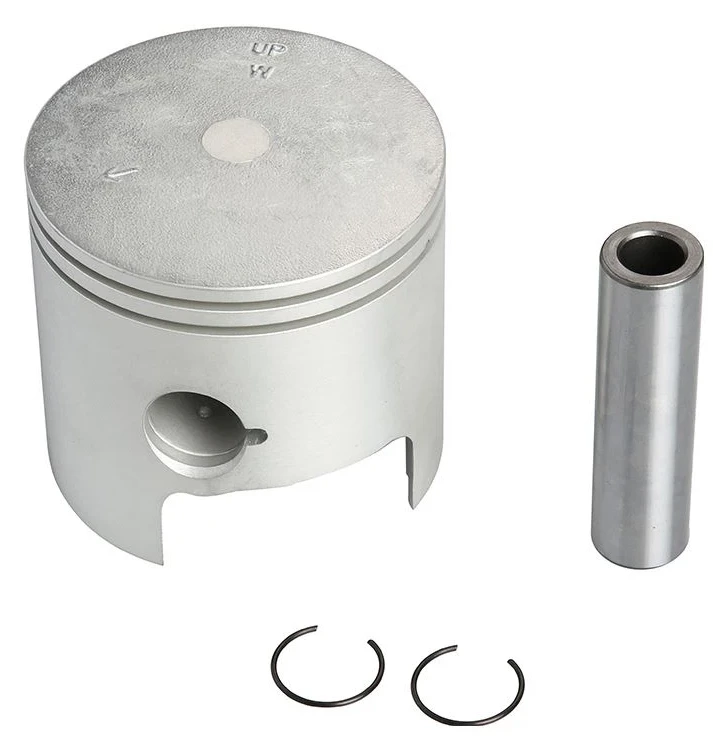
688-11631-00 82MM Piston Kit for Yamaha 75HP 85HP 90HP 2 Stroke
This piston line covers Yamaha 75HP, 85HP, and 90HP models, with 82mm bore constructed from premium AC9A aerospace-grade aluminum alloy. This material offers enhanced strength and heat resistance, making it ideal for medium-power outboard applications.
Application Scenarios: Medium fishing vessels, passenger speedboats, primary yacht engines
Starwave Technical Advantage: Precision CNC machining ensures perfect cylinder wall sealing, minimizing oil consumption and maximizing operational efficiency.
Case Study: A South American yacht rental company reported an 8% fuel consumption reduction after retrofitting their engines with these pistons, while engine performance returned to factory specifications without compromise. This validates aluminum pistons' potential for improving engine efficiency.
Professional Choice for High-Power Four-Stroke Engines
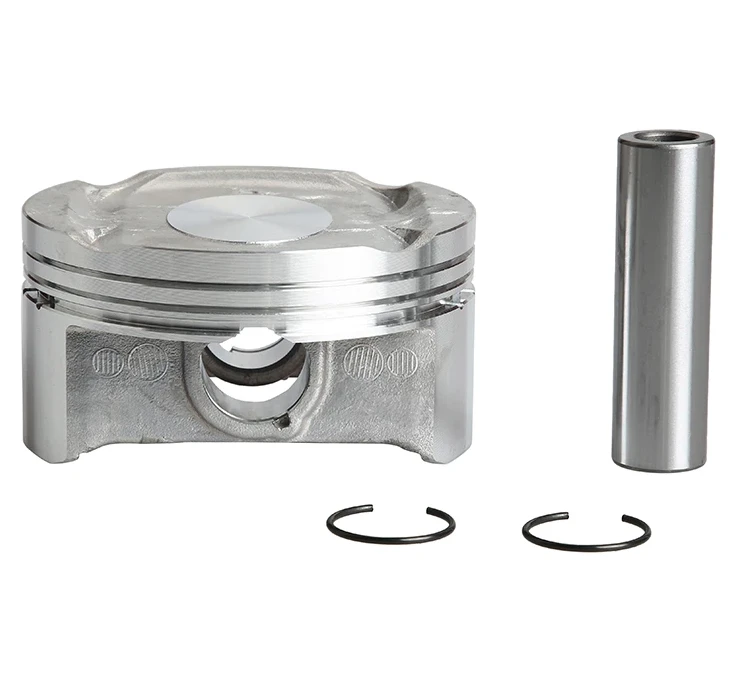
6CE-11631-00 96MM Piston Kit for Yamaha 200-300 HP 4 Stroke
Developed specifically for high-performance four-stroke engines, this 96mm bore piston handles Yamaha 200-300HP power outputs. Constructed from reinforced aluminum alloy with optimized internal cooling channels, it maintains stable performance even under extreme operating conditions.
Application Scenarios: Large yachts, high-speed patrol boats, specialized service vessels
Starwave Technical Advantage: Advanced finite element analysis optimizes piston structure for maximum strength with minimal weight. 15% lighter than original equipment pistons but offering 20% increased strength, this represents the perfect balance of power efficiency and material innovation.
Industry Endorsement: A European marine performance specialist noted, "These are the best performance pistons I've ever used. Power delivery feels smoother and more consistent, with exceptional stability during prolonged high-speed operation."
VI. Starwave Purchasing and Service Advantages
Choosing a piston is more than selecting a component; it's choosing a reliable operational partner. Starwave offers comprehensive service support backed by decades of industry experience:
Production Capability Assurance
As a national high-tech enterprise, Starwave boasts substantial technical expertise and manufacturing capabilities:
Dual IATF 16949 and ISO 9001 certification ensuring international quality standards compliance
Proprietary manufacturing facilities with decades of internal combustion engine core component production experience
Over 300 advanced production machines enabling stable mass production capabilities
Continuous technological innovation investment maintaining product leadership
Global Service Network
Our products and services have established a worldwide presence:
Primary export markets: South America (Brazil, Argentina), Southeast Asia, Africa, Europe, and North America
Specialized technical team providing 24/7 one-on-one technical support
2-hour response guarantee ensuring prompt issue resolution
Customized product development and upgrade services addressing specific operational requirements
Convenient Purchasing Experience
We strive to provide a seamless procurement experience:
Comprehensive product coverage for major brands including Yamaha, Mercury, Suzuki, and Honda with over 100 model variants
Flexible order quantity options supporting both small-batch testing and large-scale production requirements
Standard 15-20 day delivery lead time with emergency order expediting services available
Multiple payment methods (T/T, L/C) accommodating diverse international business practices
Professional integrated logistics solutions ensuring safe and on-time product delivery
VII. Conclusion: Selecting the Optimal Marine Piston Material
Through our comprehensive analysis, we can conclude:
Aluminum alloy pistons represent the optimal choice for modern high-speed marine engines, particularly suited for small-to-medium outboards, high-speed yachts, and motorboats. Their lightweight construction improves engine response and power output, while superior heat dissipation prevents thermal failures. Although initial costs may be higher, operational efficiency gains often offset these expenditures over extended service periods.
Cast iron pistons better suit large low-speed diesel engines and applications requiring continuous high-load operation. Exceptional durability and low maintenance requirements make them irreplaceable components in heavy marine operations. While weight disadvantages limit high-speed applications, their durability advantages outweigh these drawbacks in heavy-duty operational scenarios.
Established in 2010 as a specialized marine piston manufacturer, Starwave understands vessel operational requirements on a fundamental level. We offer both standardized high-quality products and customized solutions tailored to specific operational challenges. Our engineering team works closely with clients to identify optimal material selections and design configurations maximizing operational efficiency and profitability.
If you require assistance selecting marine piston materials or wish to explore our product offerings further, please contact our team at your convenience. Our technical specialists will provide personalized consultation to ensure you make the optimal choice for your marine operational requirements.
In the complex world of marine propulsion, there is no single "best" piston material-only the most appropriate selection for your specific application. Let Starwave's expertise in materials science and marine engineering provide the reliable power foundation your operations deserve.