In the cost structure of ship operation, maintenance expenditure for the power system accounts for a significant proportion. As a core moving part of the engine, the quality of the piston is directly related to the ship's power performance, fuel economy and navigation safety. An improper procurement decision may not only lead to direct losses of tens of thousands of yuan, but also cause hundreds of thousands of yuan in downtime losses and reputational damage due to engine failures.
Based on the practical experience of Starwave (Zhejiang Sanrui) in the marine piston industry since 2010 and a large number of application cases accumulated in more than 50 countries and regions around the world, we have summarized the 5 key inspection points where problems are most likely to occur in the procurement process. These pitfall avoidance guidelines will help you avoid common procurement traps and make more informed decisions.
Key Point 1: Material Authenticity Identification - Don't Be Misled by Surface Parameters
Common Industry Traps: Shoddy Substitution
In piston procurement, material issues are one of the most hidden traps. Unscrupulous suppliers often manipulate material labeling, taking advantage of the purchaser's lack of knowledge in materials science to gain improper profits by shoddy substitution.
Common material fraud practices include:
- Marking ordinary aluminum alloy as aerospace aluminum alloy: The cost difference between the two can reach more than 30%, while the performance difference is significant. The strength of AC9A aerospace aluminum alloy is more than 25% higher than that of ordinary aluminum alloy, and its hardness, heat resistance and fatigue resistance are far superior to ordinary materials.
- Falsifying silicon content: Claiming a high-silicon wear-resistant formula while the actual silicon content is far lower than the marked value. Silicon is one of the most important alloying elements in aluminum alloy. Properly increasing the silicon content can significantly improve wear resistance, but at the same time reduce toughness. Inferior products often falsify silicon content with insufficient actual addition, leading to a sharp drop in wear resistance.
- Mixing recycled materials: Mixing recycled aluminum alloy with new materials, resulting in unguaranteed material purity and performance. Recycled materials may contain various impurities and harmful elements, which will seriously affect the mechanical properties and corrosion resistance of aluminum alloy.
- Concealing defects through surface treatment: Hiding inherent material defects through surface treatment processes such as anodization and coating. Although these treatments can make the product appearance look good, they cannot improve the internal performance of the material.
In-depth Impact of Materials on Performance
Pistons of different materials show significant differences in performance:
Advantages of aluminum alloy pistons:
- Low density (about 2.7g/cm³), only 1/3 of cast iron, small reciprocating inertia, suitable for high-speed engines
- Good thermal conductivity, conducive to piston heat dissipation and reducing thermal stress
- Good machinability, suitable for precision processing of complex shapes
- Relatively good corrosion resistance, especially in marine environments
Disadvantages of aluminum alloy pistons:
- Relatively low high-temperature strength, prone to deformation under extreme working conditions
- Poor wear resistance compared with cast iron, fast wear under high-load working conditions
- Large linear expansion coefficient, requiring larger fit clearance
Advantages of cast iron pistons:
- Excellent high-temperature strength, suitable for low-speed and high-load engines
- Extremely good wear resistance, service life is usually more than twice that of aluminum alloy pistons
- Small linear expansion coefficient, smaller fit clearance and better sealing performance
Disadvantages of cast iron pistons:
- High density (about 7.2g/cm³), 2.7 times the weight of aluminum alloy, not suitable for high-speed engines
- Poor thermal conductivity, difficult heat dissipation, prone to local overheating
- High processing difficulty and relatively high manufacturing cost
Starwave's Material Assurance System
As a national high-tech enterprise, Starwave has established a strict material control system to ensure that every piston uses high-quality materials:
AC9A aerospace aluminum alloy certification: All our pistons adopt AC9A aerospace aluminum alloy materials, which are widely used in aero-engines and high-performance automobile engines with the following excellent characteristics:
- Tensile strength ≥310MPa, far exceeding 250MPa of ordinary aluminum alloy
- Brinell hardness HB ≥100, excellent wear resistance
- Good high-temperature creep resistance, still maintaining 90% strength at 150°C high temperature
- Excellent fatigue resistance, service life is more than 30% longer than ordinary aluminum alloy
- Incoming raw material inspection: Conduct spectral analysis on each batch of aluminum alloy materials to ensure compliance with component standards
- Melting process control: Real-time component monitoring during the aluminum alloy melting process
- Finished product sampling inspection: Regular sampling inspection of finished pistons to verify material stability
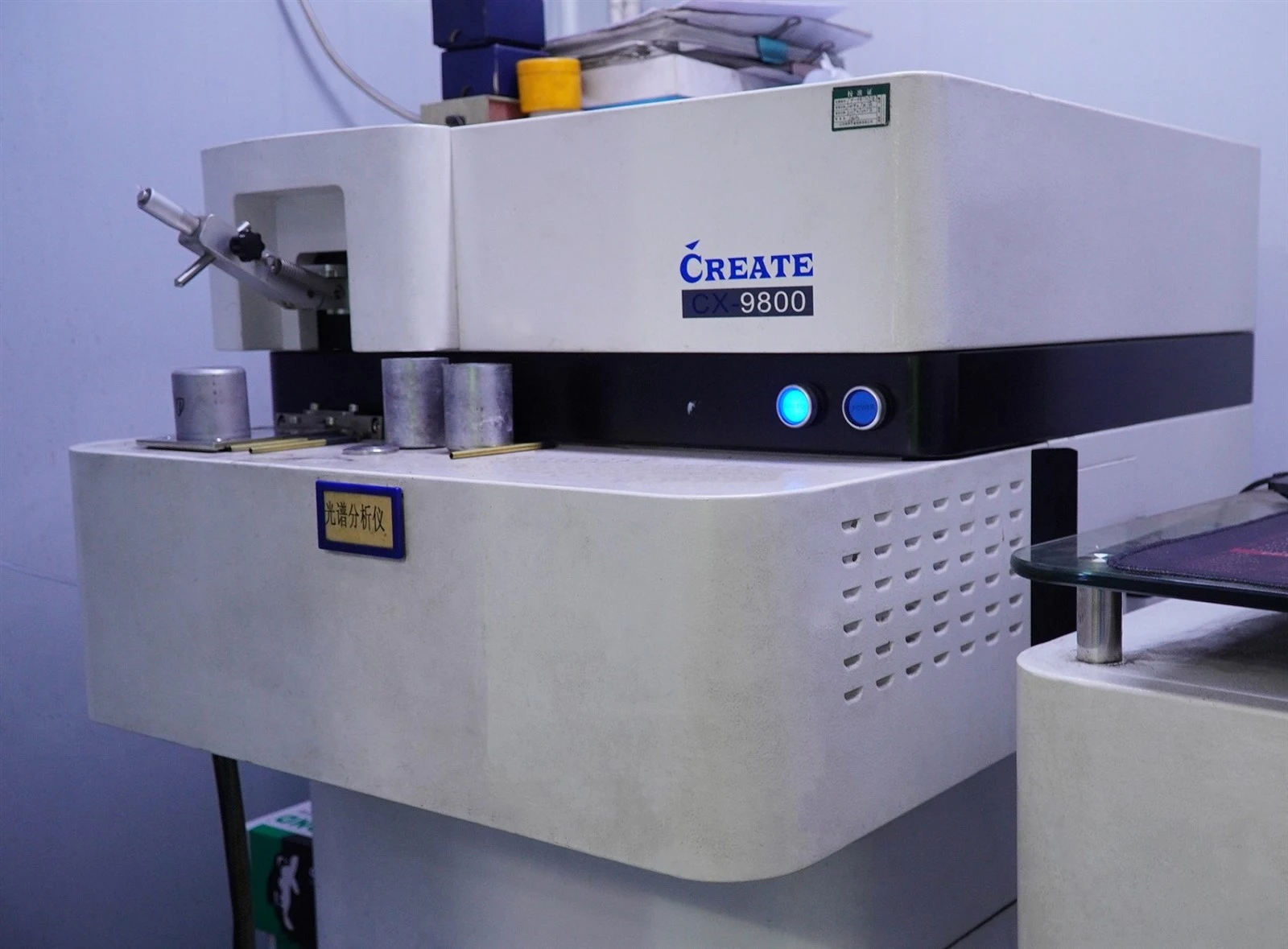
Complete traceability system: Each piston has a unique production batch number, which can be traced back to the raw material supplier, melting furnace number, production date and other information. This complete traceability system not only ensures the traceability of quality, but also provides a basis for the rapid response to quality problems.
Inspection Methods During Procurement
It is recommended that purchasers adopt the following inspection methods to verify the authenticity of materials upon receipt of goods:
1. Request material inspection reportsFormal manufacturers will provide third-party inspection reports, which should include the following key indicators:
- Chemical composition: Especially the content of major alloying elements such as silicon, copper, magnesium and zinc
- Mechanical properties: Tensile strength, yield strength, elongation, hardness, etc.
- Metallographic structure: Microstructural information such as grain size and phase composition
2. Compare weight and densityThe density of aluminum alloy is about 2.7g/cm³. The piston weight can be simply measured to calculate its density. If the density is significantly lower than this value, it indicates the possible doping of light materials; if significantly higher, it indicates the possible doping of iron-based materials.
3. Observe surface luster and textureHigh-quality aluminum alloy has a uniform and delicate surface with a unique metallic luster; inferior materials are often dark and gray with possible impurity spots or color differences. The anodized surface should be uniform without defects such as peeling and bubbles.
4. Verify through small-batch trial useIt is recommended to conduct a small-batch trial use for the first purchase. Disassemble and inspect after 300-500 hours of operation under actual working conditions to observe piston surface wear, cracks, ablation and other phenomena. This is the most reliable method to verify material performance.
Practical Cases Related to Materials
Material Problem of a Southeast Asian Fishing Vessel
To reduce procurement costs, a Southeast Asian fishing vessel customer chose a low-priced supplier whose products were marked as using AC9A aerospace aluminum alloy. However, after 600 hours of use, the piston suffered severe wear with the piston ring groove depth exceeding 0.5mm, leading to engine cylinder scuffing.
Inspection by Starwave's technical team showed that the piston actually used ordinary ADC12 aluminum alloy with a tensile strength of only 230MPa and a hardness of HB 70, far lower than the performance indicators of AC9A. The silicon content was 8.5%, lower than the marked 12%, resulting in a sharp drop in wear resistance.
After the customer switched to Starwave's genuine AC9A aerospace aluminum alloy pistons, the service life reached 1200 hours. Although the unit price was 30% higher, the comprehensive cost was reduced by 20%.
Key Point 2: Dimensional Accuracy Verification - Tolerance Determines Success or Failure
Fatal Consequences of Insufficient Accuracy
The fit clearance between the piston and cylinder wall is a key parameter of engine performance. This clearance must be precisely controlled: both excessive and insufficient clearance will lead to serious problems.
Consequences of excessive fit clearance:
- Poor cylinder sealing: The piston ring cannot effectively seal the combustion chamber, leading to a drop in compression pressure, incomplete combustion and a 15%-20% reduction in power output. This not only affects the ship's power performance, but also increases fuel consumption and operating costs.
- Abnormally increased oil consumption: Oil enters the combustion chamber for combustion through the clearance between the piston ring and cylinder wall, leading to a 2-3 times increase in oil consumption. Long-term use will also lead to increased carbon deposits, further deteriorating the engine's working environment.
- Piston slap: The piston sloshes in the cylinder, producing a slapping sound, especially obvious during cold start. This abnormal noise not only affects driving comfort, but also accelerates component wear.
- Accelerated cylinder wall wear: Piston sloshing leads to increased local wear of the cylinder wall, forming "ovalization", which further worsens the fit clearance and forms a vicious circle.
Consequences of insufficient fit clearance:
- Piston seizure: Under high-temperature working conditions, the thermal expansion of the aluminum alloy piston may cause direct contact between the piston and cylinder wall, producing severe friction and even piston seizure in the cylinder.
- Difficult starting: Especially during cold start, due to poor lubrication and insufficient fit clearance, the piston movement resistance increases, leading to difficult engine starting.
- Increased friction: Increased friction between the piston and cylinder wall not only increases the mechanical loss of the engine and reduces fuel economy, but also causes the piston temperature to rise and accelerates material aging.
- Risk of cylinder scuffing: In extreme cases, insufficient fit clearance may lead to cylinder scuffing, one of the most serious engine failures that requires replacement of the complete piston connecting rod assembly and cylinder block.
Differences in Industry Accuracy Standards
Suppliers of different levels have significant differences in their dimensional accuracy control capabilities:
| Accuracy Level | Outer Diameter Tolerance | Roundness Error | Perpendicularity Error | Weight Grouping | Market Position |
|---|---|---|---|---|---|
| Top Level | ±0.01mm | ≤0.005mm | ≤0.01mm/100mm | ≤2g | High-end Market |
| Industry Standard | ±0.02mm | ≤0.01mm | ≤0.02mm/100mm | ≤5g | Mid-end Market |
| Low-end Level | ±0.05mm | ≤0.02mm | ≤0.05mm/100mm | ≤10g | Low-end Market |
As an IATF 16949 certified enterprise, Starwave's piston processing accuracy reaches the industry-leading level, belonging to the top level category. This means our products have obvious advantages in fit clearance control, which can ensure the best performance and longest service life of the engine.
Starwave's Accuracy Control Standards
Starwave has established strict standards and processes for dimensional accuracy control:
CNC precision machining: We adopt imported German CNC lathes and machining centers to conduct precise control over each process of piston production. These equipment have micron-level processing accuracy, which can ensure the consistency and stability of product dimensions.

- Outer diameter tolerance: ±0.01mm. This means the deviation between the actual outer diameter of the piston and the marked size does not exceed 0.01mm, equivalent to 1/5 of the diameter of a human hair. Such strict tolerance control ensures the perfect fit between the piston and cylinder wall.
- Roundness error: ≤0.005mm. Roundness refers to the degree to which the piston cross-section is close to a perfect circle. The smaller the roundness error, the closer the piston shape is to a standard cylinder. Starwave's roundness control reaches the micron level, far exceeding the industry standard.
- Perpendicularity error: ≤0.01mm/100mm. Perpendicularity refers to the perpendicularity between the piston pin hole axis and the piston axis. This error directly affects the piston's movement track and force distribution. Starwave's perpendicularity control ensures the stable movement of the piston in the cylinder.
- Weight grouping: The weight difference of pistons in the same group ≤2g. For multi-cylinder engines, the weight consistency of pistons in each cylinder is crucial. Excessive weight difference will lead to unstable engine operation, increased vibration, and may even damage the crankshaft and bearings. Starwave's weight grouping control ensures the balance of multi-cylinder engines.
Verification Methods During Procurement
It is recommended that purchasers conduct the following inspections to verify product dimensional accuracy upon receipt of goods:
1. Measure the outer diameter with a micrometerMeasure two mutually perpendicular diameters at the upper, middle and lower positions of the piston, a total of 6 data points. These 6 data points should be basically consistent with a deviation not exceeding 0.02mm. If some positions are significantly larger or smaller, it indicates the existence of roundness or cylindricity deviation of the piston.
2. Check the coaxiality of the piston pin holeUse a special coaxiality detector to measure the coaxiality between the piston pin hole and the piston outer circle. The coaxiality error should not exceed 0.02mm, otherwise it will cause eccentricity of the piston during movement and accelerate wear.
3. Compare the weight of multiple pistonsUse an electronic scale to accurately measure the weight of multiple pistons in the same batch. The weight difference should not exceed 5g. For applications with higher requirements, the weight difference should be controlled within 2g. If excessive weight difference is found, it indicates unstable processing accuracy or mixing of products from different batches.
4. Verify the fit clearance through trial installationConduct trial installation on the actual cylinder block to measure the fit clearance between the piston and cylinder wall. The fit clearance should comply with the technical specifications of the engine manufacturer. Generally, the fit clearance of aluminum alloy pistons is 0.1%-0.15% of the cylinder diameter. If the fit clearance is too small or too large, it is necessary to adjust the piston size or process the cylinder block.
Key Point 3: Surface Process Inspection - Details Reveal Quality
Importance of Surface Treatment
The quality of piston surface treatment directly affects its wear resistance, corrosion resistance and heat dissipation performance. In the harsh working environment of the engine, the piston surface needs to withstand the challenges of high temperature, high pressure and high-speed friction. The quality of surface treatment will directly affect the service life and reliability of the product.
Main functions of surface treatment:
- Improve wear resistance: Increase the hardness and wear resistance of the piston surface through surface hardening or coating treatment to extend service life
- Enhance corrosion resistance: Form a protective layer through anodization or coating treatment to resist corrosion from salt spray, fuel, oil and other media
- Reduce friction coefficient: Lower the friction coefficient between the piston and cylinder wall through polishing or special coating to improve mechanical efficiency
- Improve heat dissipation performance: Enhance heat dissipation effect and reduce piston temperature by improving surface finish
Common Surface Defects and Their Impacts
- Uneven coatingUneven coating will lead to accelerated local wear and a service life reduction of more than 30%. Areas with too thin coating have insufficient wear resistance and will become the starting point of wear; areas with too thick coating may peel off, forming foreign objects and accelerating the wear of other components.
- Excessive surface roughnessExcessive surface roughness will increase the friction coefficient, leading to a 5%-8% increase in fuel consumption, and also increase the piston temperature and accelerate material aging. Rough surfaces are also prone to carbon deposit and impurity accumulation, further deteriorating the working environment.
- Unremoved burrsUnremoved burrs are very dangerous defects that may cause cylinder wall scratches and secondary damage. Burrs may also fall off during movement, enter the lubrication system, block the oil circuit and cause poor lubrication.
- Incomplete anodized layerThe anodized layer is an important protective layer for aluminum alloy pistons. If the anodized layer is incomplete or insufficient in thickness, the corrosion resistance of the piston will drop significantly, which is particularly fatal in marine environments. Salt spray will corrode the base material through the defects of the anodized layer, leading to a decrease in piston strength.
- Excessively deep processing linesExcessively deep processing lines not only affect the appearance, but also the sealing performance and heat dissipation effect. Deep lines are prone to carbon deposit accumulation, leading to piston ring seizure and increased friction resistance.
Starwave's Surface Treatment Processes
Starwave adopts multiple precision surface treatment processes, and each process is strictly implemented in accordance with process standards:
- Multi-stage polishing treatmentPolishing is an important process to improve surface finish. Starwave adopts a multi-stage polishing process, from rough grinding to fine grinding and then to mirror polishing, to gradually improve the surface finish. The final surface roughness Ra ≤0.4μm, reaching a mirror effect. This ultra-high surface finish not only reduces friction, but also reduces carbon deposit adhesion, enabling the piston to maintain a good working state after long-term operation.
- Special wear-resistant coatingThis is one of Starwave's core competitive technical advantages. We apply a layer of special wear-resistant coating on the piston surface with a hardness of more than HV400, far higher than that of the base material. Through our tests and application verification, pistons adopting this coating technology have a service life more than 30% longer than ordinary aluminum alloy pistons. This technology is particularly suitable for high-load and high-wear application scenarios such as fishing vessels and commercial passenger ships.
- Complete anodization treatmentAnodization is an important process for aluminum alloy surface treatment. Starwave's anodization treatment has the following characteristics:
- Anodized layer thickness of 15-20μm with uniform thickness
- Anodized layer hardness of more than HV300, excellent wear resistance
- Low porosity of the anodized layer, excellent corrosion resistance
- Firm combination between the anodized layer and the base material, not easy to peel off
4. Deburring and ultrasonic cleaningDeburring is an important process to ensure surface quality. Starwave adopts a combination of mechanical deburring and manual finishing to ensure all edges are properly chamfered without any burrs. Ultrasonic cleaning can completely remove impurities and oil stains on the surface and in blind holes to ensure surface cleanliness.

Inspection Methods During Procurement
It is recommended that purchasers carefully inspect the following aspects to verify the quality of product surface treatment:
- Observe surface glossHigh-quality pistons have a uniform and glossy surface without defects such as dark spots, color differences and scratches. The gloss should be consistent when observed under different light conditions without local darkening or brightening. The presence of dark spots or color differences may indicate uneven materials or incomplete surface treatment.
- Check coating integrityThe coating should evenly cover the piston surface without defects such as peeling, bubbles and cracks. A magnifying glass or microscope can be used to check the coating quality. Peeling or bubbles in the coating indicate problems with the coating process and unguaranteed wear resistance and corrosion resistance of the product.
- Touch to check smoothnessGently slide your finger across the piston surface, which should feel smooth without abnormalities such as burrs, protrusions and depressions. Special attention should be paid to key parts such as piston ring grooves and piston pin holes. Burrs or processing defects in these parts will seriously affect product performance.
- Check chamfers and transitionsAll edges should have reasonable chamfers with smooth and natural transitions. The size and shape of the chamfers should be consistent without obvious processing marks. Chamfers not only affect the appearance, but also assembly and service life. Unreasonable chamfers may lead to stress concentration or assembly difficulties.
- Compare products in the same batchInspect the surface treatment quality of multiple products in the same batch, which should be consistent. If some products have good surface quality while others are poor, it indicates unstable production process control and unguaranteed consistency of product quality.
Key Point 4: Technical Parameter Matching - One Mistake Spoils Everything
Severe Consequences of Parameter Errors
The technical parameters of the piston must be completely matched with the engine. Any parameter error may lead to serious consequences. Pistons are not universal parts; the piston specifications of engines of different brands and models are different and cannot be mixed.
Consequences of mismatched compression ratio:The compression ratio is a key parameter of engine design, directly affecting the engine's power performance, fuel economy and emission performance. If the compression height of the piston is incorrect, the compression ratio will deviate from the design value.
- Excessively high compression ratio: May cause detonation, especially when using low-grade fuel. Detonation will seriously damage the engine and even lead to serious failures such as piston ablation and connecting rod bending.
- Excessively low compression ratio: Will lead to incomplete combustion, a 10%-15% reduction in power output, a 5%-8% increase in fuel consumption, and also lead to deteriorated emissions.
Consequences of incorrect piston pin diameter:The fit between the piston pin and the small end bushing of the connecting rod is a precision fit with extremely high accuracy requirements. If the piston pin diameter is incorrect:
- Too small diameter: Excessive fit clearance will lead to increased impact load, accelerated wear of the connecting rod bushing, and may also cause axial movement of the piston pin.
- Too large diameter: Unable to install; forced installation will cause deformation of the connecting rod or piston pin hole, and in severe cases, connecting rod fracture.
Consequences of incorrect piston ring specifications:
Piston rings are important components of the piston, responsible for sealing the combustion chamber and controlling oil consumption. If the piston ring specifications are incorrect:
- Mismatched ring height: Will lead to poor sealing or seizure, affecting engine performance.
- Mismatched tangential elasticity: Excessively low elasticity will lead to poor sealing and increased oil consumption; excessively high elasticity will lead to increased friction and accelerated wear.
- Mismatched surface treatment: Will affect wear resistance and fit with the cylinder wall, impacting sealing performance.
Consequences of incorrect piston height:Piston height refers to the distance from the center of the piston pin hole to the top of the piston. If the piston height is incorrect:
- Too high: May cause interference between the piston top and valves, collision between the piston and valves when the valves are open, leading to valve bending, piston damage and even serious engine damage.
- Too low: Will lead to insufficient compression ratio, power drop, and may also cause mismatching between the piston top and the combustion chamber shape of the cylinder head, affecting combustion efficiency.
Starwave's Parameter Matching Service
As a piston supplier covering the full range of 2.5HP-300HP, Starwave provides professional parameter matching services to ensure that the pistons purchased by customers are fully adapted to their engines.
Sample confirmation service:For important orders or uncertain model matching, Starwave can provide samples for actual installation verification:
- After receiving the samples, the customer can conduct trial installation on the actual engine
- Verify size matching, performance and reliability
- Conduct bulk procurement only after confirmation
- Minimize procurement risks to the greatest extent
Custom development capability:For special needs or discontinued models, Starwave provides custom development services:
- Conduct reverse engineering based on samples or drawings provided by customers
- Develop fully matched alternative products
- May provide better cost performance while ensuring performance
- Provide bulk custom services to meet special needs
Confirmation Methods During Procurement
It is recommended that purchasers conduct sufficient confirmation before procurement to ensure the accuracy of parameter matching:
1. Provide complete engine informationProvide accurate engine information to the supplier, including:
- Engine brand and model (e.g.: Yamaha F150)
- Engine power and horsepower (e.g.: 150HP)
- Engine type (2-stroke/4-stroke)
- Production year or serial number
- Service environment (fresh water/seawater, climatic conditions, etc.)
2. Compare original piston parametersIf the original piston is still available, measure the key parameters of the original piston for comparison:
- Cylinder diameter: Measure the maximum diameter of the piston skirt
- Compression height: Measure the distance from the center of the piston pin hole to the top of the piston
- Piston pin diameter: Measure the outer diameter of the piston pin
- Piston ring specifications: Measure the width and thickness of the piston ring
- Piston weight: Measure the total weight of the piston
3. Request a parameter comparison tableThe supplier should provide a detailed parameter comparison table clearly indicating:
- Piston model and corresponding engine model
- Values of key parameters (cylinder diameter, compression height, piston pin diameter, etc.)
- Comparison description with original parts
4. Verify through small-batch trial installationIt is recommended to purchase 1-2 pieces for trial installation for the first purchase:
- Check whether the installation is smooth without interference
- Measure whether the fit clearance is appropriate
- Start the engine and check for abnormalities
- Disassemble and inspect after 50-100 hours of operation to confirm performance and reliability
5. Keep the original part as a referenceIt is recommended to keep the original piston as a reference when replacing the piston:
- Compare the size and weight to confirm the accuracy of the new piston
- Observe the wear of the original piston to analyze the service working conditions
- In case of quality problems, comparative analysis can be conducted with the original part
Key Point 5: Supplier Qualification Evaluation - The Cornerstone of Long-term Cooperation
Potential Risks of Incomplete Qualifications
Choosing a supplier with incomplete qualifications may face the following risks:
1. Unstable quality
Without a sound quality control system, product quality is volatile. The quality of one batch of products may be acceptable, while the next batch may have serious problems. This quality instability will bring great uncertainty to the purchaser and seriously affect production and operation plans.
2. Lack of technical support
Unable to provide timely and effective technical support when problems occur. If the supplier has no professional technical team to provide diagnosis and solutions for improper piston installation or problems during use, the problem may expand and cause greater losses.
3. Unsecured supply
Insufficient production capacity or poor management cannot guarantee on-time delivery. Especially for emergency orders, if the supplier's production management capability is insufficient, timely delivery may not be possible, leading to long-term ship downtime and huge economic losses.
4. Lack of after-sales service
Proper solutions cannot be obtained after product problems occur. If the supplier has no sound after-sales service system, it may shirk responsibility or fail to provide timely and effective solutions after quality problems occur, bringing losses to the purchaser.
5. Weak continuous improvement capability
Without R&D capability, it is impossible to continuously improve product performance. Engine technology is constantly developing. If the supplier has no R&D capability, it cannot keep up with the development of industry technology, and product performance may gradually lag behind market demand.
Starwave's Comprehensive Qualification Advantages
As a leading piston manufacturer in the industry, Starwave has the following core qualifications:
1. National High-tech Enterprise
Founded in 2010, we have focused on the marine piston industry for 14 years and owned a number of core patent technologies. As a national high-tech enterprise, Starwave invests more than 5% of its annual revenue in R&D to continuously promote technological innovation and product upgrading. Our R&D team consists of materials scientists, mechanical engineers and test engineers, who continuously explore in the fields of materials science, structural design and surface treatment.
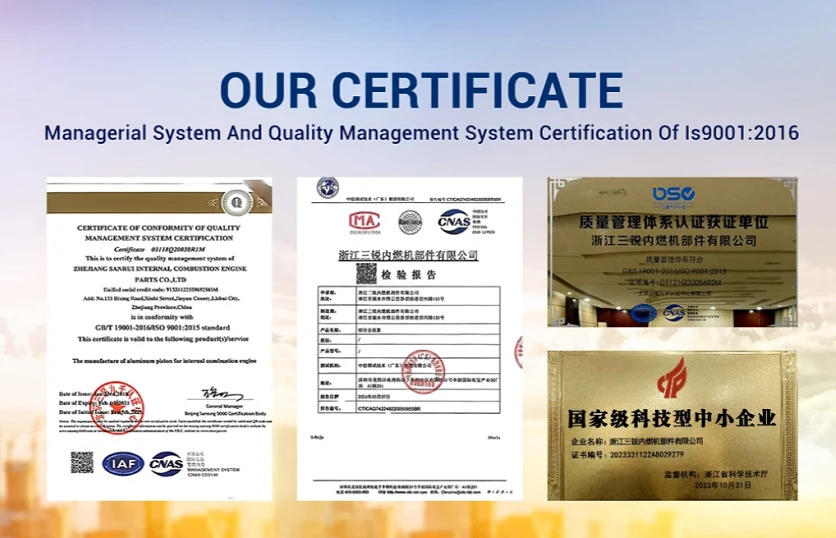
2. IATF 16949 Certification
IATF 16949 is the international quality management system standard for the automotive industry with extremely strict requirements for product quality control. Starwave is one of the few domestic marine piston manufacturers certified by IATF 16949, which proves our ultimate pursuit of product quality. This certification covers the entire process quality management system from design and development, production and manufacturing to sales and service, ensuring the consistency and reliability of products.
3. ISO 9001 Certification
ISO 9001 is the quality management system standard formulated by the International Organization for Standardization. Starwave passed the ISO 9001 certification as early as 2012 and established a sound quality management system. This certification covers quality policy, quality objectives, process control, continuous improvement and other aspects, ensuring the standardization and effectiveness of enterprise operation.
4. More than 300 Production Equipment
Starwave has more than 300 advanced production equipment and testing instruments, including imported German CNC lathes, machining centers, coordinate measuring machines, hardness testers, metallographic microscopes, etc. These advanced equipment provide hardware guarantee for the manufacture of high-precision and high-quality products.
Value of Establishing Long-term Cooperative Relationships
Piston procurement is not a one-time transaction, but a process of establishing long-term cooperative relationships. Establishing long-term cooperative relationships can bring the following values:
- Bulk procurement discounts Long-term cooperation can obtain more competitive prices. Starwave provides tiered price discounts for long-term customers.
- Priority delivery guarantee Important orders can enjoy priority delivery. For long-term cooperative customers, Starwave will prioritize production planning to ensure on-time delivery. Urgent orders can also enjoy expedited services to shorten the delivery cycle.
- Custom development support Special needs can obtain custom development support. For customers with special needs, Starwave can provide custom development services to develop special products according to the specific requirements of customers and meet personalized needs.
- Technical resource sharing Access to the latest technical information and product upgrade information. Starwave will regularly provide long-term customers with the latest technical data, product upgrade information, industry trends, etc., to help customers timely understand the development trend of technology and optimize product selection.
Summary: Let Professionalism Escort Your Procurement Decisions
Marine piston procurement is a highly professional work that requires finding the best balance among quality, price and service. By mastering the above 5 key inspection points, you can effectively avoid common procurement traps and make more informed decisions.
If you are looking for a reliable marine piston supplier, or have any questions about piston selection and procurement, please feel free to contact Starwave's professional team at any time.
Contact Information:
- Official Website: www.starwavemarine.com
- Technical Consultation Hotline: +86 137 3595 8275
- Email: info@starwavemarine.com
- Address: Zhejiang Province, China
Our Commitment
As your reliable partner, Starwave commits to:
- Providing high-quality products to ensure the reliable operation of your engine
- Providing professional technical services to solve your technical problems
- Providing fast delivery services to reduce your downtime losses
- Providing competitive prices to lower your operating costs
- Providing comprehensive after-sales service to free you from worries
Let Starwave's professional knowledge and rich experience provide the most reliable guarantee for your ship's power system. We look forward to establishing a long-term and stable cooperative relationship with you to create greater value together.
Choose Starwave, choose quality, choose professionalism, choose reliability!