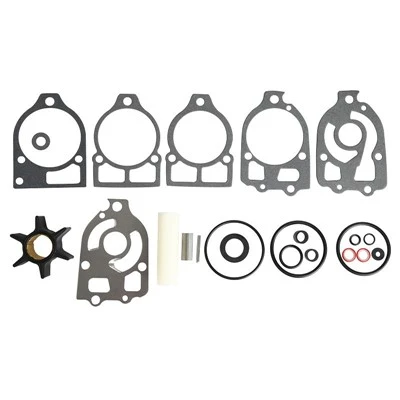
The piston of an automobile engine is one of the main components in the engine. It forms a piston group with piston rings, piston pins, and other parts, and together with the cylinder head, forms a combustion chamber. It bears the force of gas and transmits power to the crankshaft through the piston pins and connecting rods to complete the working process of the internal combustion engine. Due to the harsh working environment of high speed, high pressure, and high temperature of the piston, and considering the smooth and durable operation of the engine, it is required that the piston must also have sufficient strength and stiffness, good thermal conductivity, high heat resistance, small expansion coefficient (small size and shape changes), low relative density (light weight), wear and corrosion resistance, and low cost. Due to the high and numerous requirements, some of which are contradictory, it is difficult to find a piston material that can fully meet all the requirements. The pistons of modern engines are generally made of aluminum alloy, which has the outstanding advantages of low density and good thermal conductivity. However, it also has the disadvantages of relatively large expansion coefficient and poor high-temperature strength. These disadvantages can only be met through reasonable structural design to meet the requirements of use. So, the quality of a car engine depends not only on the materials used, but also on the rationality of the design.
There are tens of thousands of parts in a car, ranging from crankshafts and gearboxes to springs, washers, bolts, and nuts. Every component has its own function, such as piston rings, which may seem simple in shape, light in weight, and cheap in price, but their function is significant. Without it, the car cannot move, and even if it has some minor problems, the car will be abnormal, either due to high fuel consumption or insufficient power. In the entire coordination between the piston group and the cylinder, the piston ring is the one that truly contacts the cylinder wall. It fills the gap between the piston and the cylinder wall to seal the combustion chamber, making it the most easily worn part in the engine. Piston rings are generally made of cast iron, with a certain degree of elasticity, various cross-sectional shapes, and surface coatings to increase running in performance. When the engine is running, the piston will expand due to heat, so the piston rings have opening clearances. To maintain sealing, the opening clearance positions of each piston ring should be staggered during installation. A piston often has three to four piston rings, which are divided into two categories according to their different functions: gas rings and oil rings. The gas ring is installed in the ring groove at the upper end of the piston head to prevent air leakage, transfer the heat of the piston head to the cylinder wall, and dissipate the heat of the piston. The function of the oil ring is to prevent lubricating oil from entering the combustion chamber, scraping excess lubricating oil from the cylinder wall back to the oil pan. It is installed in the lower ring groove of the gas ring. As long as the sealing function requirements are met, having fewer piston rings is better than having more. Having fewer piston rings not only maintains the minimum friction area and reduces power loss, but also shortens the height of the piston, which in turn reduces the height of the engine.
If the installation of the piston ring is improper or the sealing is poor, it will cause the oil on the cylinder wall to climb up to the combustion chamber and burn together with the mixture, causing oil burning phenomenon. If the clearance between the piston ring and the cylinder wall is too small or the piston ring is stuck in the ring groove due to carbon deposition, it is likely to scratch the cylinder wall during the reciprocating motion of the piston. Over time, deep grooves will form on the cylinder wall, which is commonly known as the "cylinder pulling" phenomenon. The grooves on the cylinder wall and poor sealing can also cause oil burning. Therefore, the working condition of the piston should be regularly checked to avoid the occurrence of the above two situations and ensure the good operation of the engine.